Retirees and S&P 500 Funds: Time to Rethink Your Tech Exposure?
Examine how Nvidia's wild ride exposed the tech tilt inside S&P 500 funds, and why dividend-oriented funds deserve a hard look from retirees who can't spare recovery time.

Key Takeaways
- One CEO's resignation and return sent the S&P 500 below 7,000, then lifted it more than 300 points in a single day.
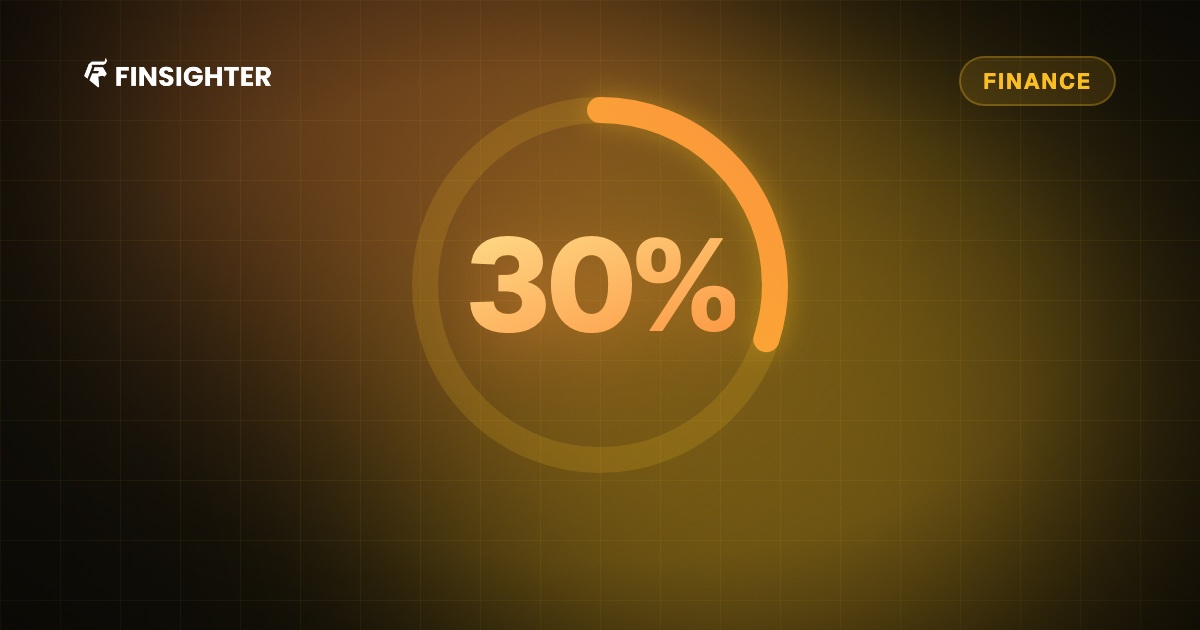
- Five giants, Nvidia, Apple, Microsoft, Amazon and Alphabet, make up close to 30% of the Vanguard S&P 500 ETF.
- The index's AI-fueled tech tilt makes it a riskier-than-normal pick right now.
- Over the long haul, S&P 500 funds still make sense for most investors.
- Retirees can't spare the time a crash takes to heal, so dividend-oriented funds deserve a look.
- Some alternative funds carry no tech exposure at all.
Imagine your retirement nest egg riding on one executive's job status. That's roughly what happened when Nvidia's CEO, Jensen Huang, resigned and then returned within a few weeks.
The S&P 500 felt every jolt. Amid the sell-off, the index dropped below 7,000, its lowest point since April, then added more than 300 points in a single day once Huang was reinstated.
For retirees and other risk-averse investors, that whiplash raises a blunt question: do S&P 500 funds still belong at the center of the plan? Let's get started.
Watching Nvidia Rattle Markets
One boardroom drama shook an entire index. Picture a tightrope walker whose pole suddenly shifts weight: that was the S&P 500 when Nvidia's CEO, Jensen Huang, resigned and then came back within a few weeks.
Amid the sell-off, the broad index slipped below 7,000, its lowest point since April. Once Huang was reinstated and Nvidia's stock jumped, the index added more than 300 points in a single day.
Swings like that aren't a glitch. Investors who track the index through funds such as the Vanguard S&P 500 ETF have to come to terms with them. Over the long run the fund can serve well, yet today's tech exposure makes it riskier than normal.
Measuring S&P 500 Funds' Tech Tilt
Buying the S&P 500 feels like owning a slice of everything. In practice it's a pie where a handful of tech giants claim the biggest wedges, since AI has sent tech stocks rising feverishly in recent years.
Nvidia, Apple, Microsoft, Amazon and Alphabet lead the Vanguard S&P 500 ETF's holdings. Those five alone account for close to 30% of the portfolio, and that's only the visible part of the iceberg.
Beneath the surface sit companies with indirect AI exposure, including energy firms involved in data center build-outs. The fund's tech sensitivity runs deeper than the ticker list suggests, which is why one CEO headline can move the whole index.
Facing Retirees' Recovery Problem
Time is the one asset retirees can't print more of. A crash stings everyone, but the retiree has the shortest runway to wait out the repair.
Tracking the S&P 500 makes sense for the long haul. Over a stretch of five years or less, though, a lot can happen. If a crash occurs, the market can take a long time to recover.
That's the catch for people drawing on savings rather than adding to them. Patience is a tidy strategy on paper, but for retirees recovery time is time they can't spare.
Weighing Dividend-Oriented Funds
Think of dividend-oriented funds as the sturdy station wagon parked next to the S&P 500's sports car. Less thrill, fewer white-knuckle moments. They don't carry nearly as much exposure to tech.
Some of these funds have no tech exposure at all. Over shorter periods, those types of investments offer much less volatility and are described as safer options to hang on to.
Still, safer is a comparison, not a guarantee. Many funds beyond the S&P 500 carry little to no exposure to tech, so the menu is wider than one ticker. Retirees get a prompt to compare, not a command to flee.
Choosing Funds That Fit Retirement
So, ditch or keep? The honest answer depends on who's asking. For most long-term investors, tracking the S&P 500 still makes a lot of sense, even with a crash or correction on the horizon.
Retirees face a different equation. For the risk-averse among them, the index's tech heft acts like a stock pick they never made, and dividend-oriented funds offer much less volatility during shorter periods.
Notice the real question isn't whether the S&P 500 is good. It's whether its swings fit your timeline. A fund that suits a long horizon can feel jarring on a short one.
Long Story Short
The Nvidia episode wasn't a freak accident. It was a reminder of how much tech now steers the S&P 500, with five holdings making up close to 30% of the Vanguard S&P 500 ETF. For most long-term investors, tracking the index still makes a lot of sense, crash or correction on the horizon or not. Retirees play a different game, one where a long recovery is a cost they can't absorb. So the actionable move is a review, not a panic sale. Check how much tech your funds really carry, and compare dividend-oriented funds, which don't have nearly as much exposure to tech. Some funds have none at all. Markets will keep swinging, and that's the one certainty. The calmer outlook belongs to the investor whose holdings match the time they have left to wait.