Iran War Enters Its Ninth Month as Voters Demand Congress Act
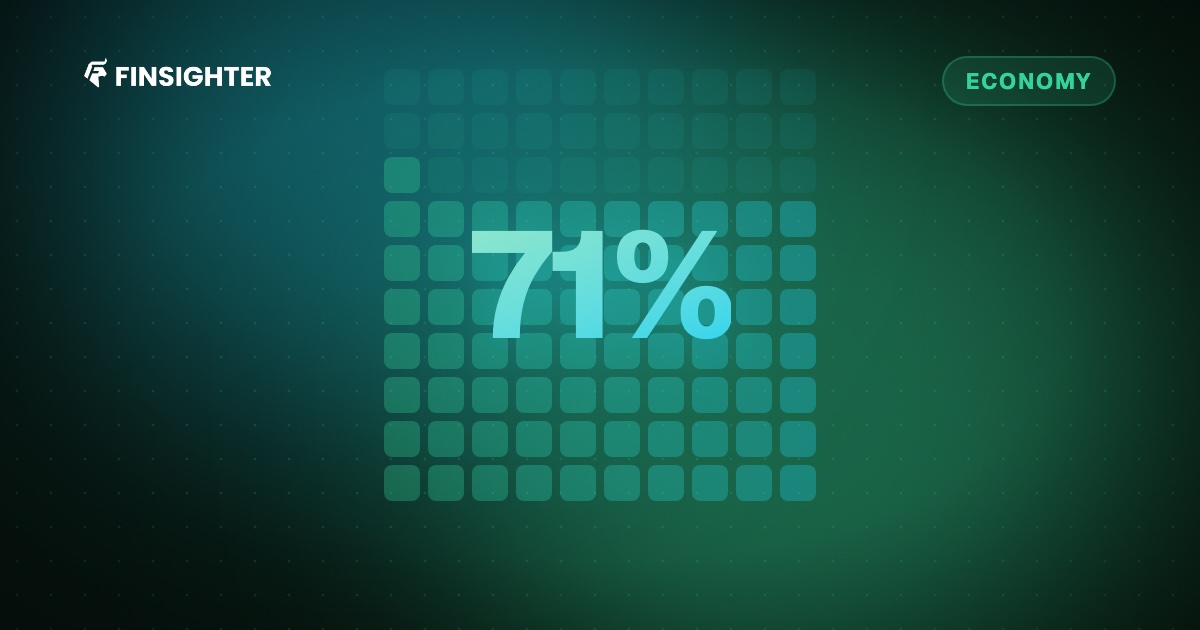
Ending the Iran war now rests on talks in Doha, a new Democratic Congress and a public worn down by fuel prices, with 71% of Americans backing legislation to stop it.

Key Takeaways
- The Iran war is in its ninth month, and fuel prices have surged across nearly every sector of the global economy.
- Trump says the war ends 'fairly soon' while keeping America 'docked and loaded.' Call it optimism with a loaded holster.
- Iran says no direct talks are happening, yet negotiators spent a third consecutive day in Doha with Qatari mediators.
- A Reuters/Ipsos poll found 71% of Americans want Congress to pass legislation ending the conflict.
- Oil is sliding on de-escalation hopes, with Brent hovering near a 10-week low.
- Democrats take power on January 3, but the same poll shows neither party is a crowd favourite.
Imagine a conflict that started in February still dominating the headlines in November. The Iran war is now in its ninth month, and it has pushed fuel prices higher across nearly every sector of the global economy.
Lately the tone has shifted. Trump says the war ends 'fairly soon,' Iranian negotiators have been sitting in Doha with Qatari mediators, and voters have just handed Democrats both chambers of Congress.
Behind those headlines sit damaged tankers, jittery oil benchmarks and a poll with a blunt message. We pulled three sources together to show where the Iran war stands, who is pushing for an exit and what it means for your wallet. Let's get started.
Tracking the Iran War's Ninth Month
The Iran war has settled into an uneasy rhythm, like a pressure cooker whose lid rattles but never quite blows. The US and Israel launched it in February, and the conflict is now in its ninth month, with a naval blockade still squeezing Iran.
Trump says the end is coming 'fairly soon' and that Iran 'militarily is effectively over,' pointing to a destroyed navy and surging inflation that he says has hollowed out its economy. He also announced Operation Iron Gate, a task force meant to stop Iran moving advanced weapons over ground routes.
Yet the same president says America is 'docked and loaded' while calling fresh strikes 'quite unlikely.' That is a leash held loosely, not dropped. The administration has also toned down its war rhetoric since the midterms handed Republicans a bruising loss.
Weighing Talks Against Threats
Diplomacy here looks like a game of telephone played through a Qatari switchboard. Iranian negotiators sat in Doha for a third consecutive day of talks, while Iran's top diplomat, Abbas Araghchi, insists no direct talks are being held with Washington.
Iran's proposal, relayed through mediators, demands lifted sanctions and a new shipping route in the Strait of Hormuz. Araghchi said it reopens the strait within two days if the US meets several conditions, and Washington was reviewing it, according to Reuters.
But the mixed messages keep coming. Mohsen Rezaei of Iran's Supreme National Security Council told Washington to stop 'manufacturing fake news about imaginary talks,' and an army spokesman warned that Trump is not positioned to dictate when a new war ends or on what terms.
Counting the Iran War Costs
Every war sends an invoice, and this one lands at the gas pump. The conflict has driven a surge in fuel prices that has hit nearly every sector of the global economy, from shipping to supermarkets.
Oil has started to exhale on de-escalation hopes. West Texas Intermediate fell over 1% to $85.8 a barrel after sliding more than 4% the session before, while Brent sat at $91.56, near its 10-week low.
The water itself remains risky. A Qatari LNG carrier, Al Mayeda, was attacked on Friday, though its crew was unhurt, and a British maritime agency reported another vessel struck by an unknown projectile in the Strait of Hormuz. Iran has targeted ships since the war began to assert control over shipping.
Listening to Voters on Congress
Voters delivered their verdict at the ballot box, and it read like a receipt. Democrats won their largest majorities in the Senate and House since at least 2008, while Republicans lost both chambers over living costs and an unpopular war.
A Reuters/Ipsos poll puts numbers on the mood. A full 71% of Americans, including 51% of Republicans, want Congress to pass legislation ending the conflict, and 62% back repealing tariffs on imports. Fuel prices and import taxes are stacking on top of each other.
Still, appetite for confrontation is thin. More respondents called an impeachment push bad for the country than good, and Trump's approval sits near the lowest level of his career. Democrats are no heroes either, since more Americans view them unfavourably than favourably.
Navigating Iran War Uncertainty
Trump has boiled the choice down to a coin with two faces. 'Either they'll make a deal, or we'll just end it,' he said, adding that the war gets put away 'one way or the other.' Clean as a slogan, murky as a plan.
The pieces around him are moving. Democrats take power when the new Congress is sworn in on January 3, and party leaders say they will try to force an end to the war. The UAE's Anwar Gargash says the region hopes for a breakthrough while braced for the worst.
The caution is in the fine print. A diplomat told Axios that Trump wants a deal and will give talks a chance, but reserves the right to reverse course if Iran does not take them seriously. Some Israelis also worry Netanyahu is eager to attack Iran again after his election setback.
Long Story Short
The Iran war enters its ninth month running on two parallel tracks. One is diplomatic, with mediators in Doha, a proposal on sanctions and Hormuz shipping, and an administration that has toned down its rhetoric. The other is domestic, with voters who link the war to soaring living costs. For readers, the practical move is to watch the pump and the oil screen rather than the podium. Brent hovering near a 10-week low shows markets rewarding calm talk. Treat every threat and every denial as noise until something is signed, because Iran disputes that talks are underway while Trump says Tehran is talking politely. Democrats take power on January 3 with a public mandate on costs, yet the poll is clear that neither party is loved. Trump frames the choice as a deal or an ending, and the region is hoping for the first while braced for the second. For households tired of paying more at the pump, hope is fragile but real.