S&P Turns Negative on France's Credit Rating Outlook: What It Means
Warning shots from S&P and Fitch put France's credit rating outlook under a harsh spotlight, as a stalled budget, a technical recession and political gridlock test Paris's fiscal resolve.

Key Takeaways
- S&P kept France at A+ but swapped 'stable' for 'negative', which is a polite way of saying the clock has started.
- A negative outlook signals a downgrade is likely within one to two years, so this is a warning, not a verdict.
- France has now logged three straight quarters of contraction, enough to meet the technical definition of a recession.
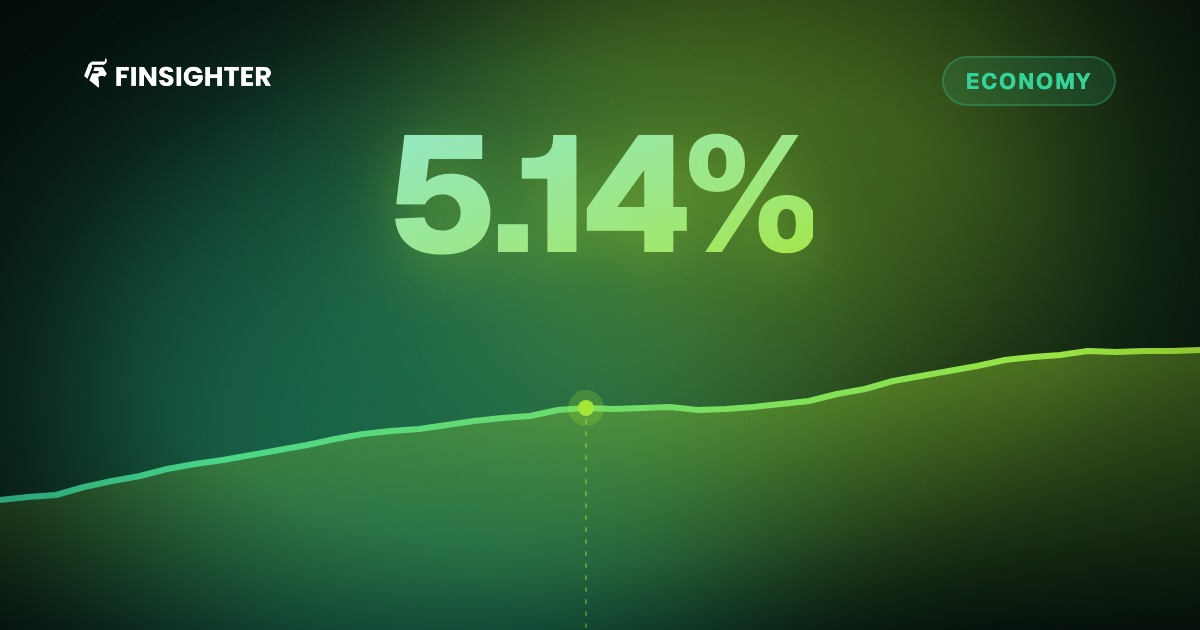
- The 10-year yield hit 5.14%, the highest since 2002, and that's the market voting with its wallet.
- Politics is the wild card: a minority government, a divided parliament and a presidential race all crowd the budget.
- Fitch moved the same way late last month, so S&P isn't a lone voice in the room.
Imagine a lender quietly changing one word on your file. Your grade stays put, but the note beside it now reads 'negative'. That's what S&P Global Ratings did to France on Friday.
The agency kept France's credit rating at A+ and moved the outlook from stable to negative, citing sluggish growth, heavy debt-servicing costs and a political climate that struggles to agree on a fix. Fitch had already turned the same dial late last month.
So what does a negative outlook really tell us, and why should anyone outside Paris care? Let's get started.
Reading France's Credit Rating Outlook
A rating outlook is a weather forecast, not the storm itself. S&P kept France at A+, yet swapped 'stable' for 'negative', and that single word changes the mood in every finance ministry watching.
A+ sits fifth among the 10 investment-grade tiers, a solid grade that still feels the tug of economic cycles. A negative outlook signals a downgrade is likely within one to two years. S&P pointed to sluggish growth and debt-servicing costs making deficit reduction harder.
Still, nothing has been cut yet. The agency affirmed the rating, and it flagged a downgrade as the consequence if deficits fail to fall meaningfully or growth stays below its projections for a prolonged period. Fitch had already moved in the same direction late last month.
Tracking the Recession Signal
Recession is a heavy word, and France has now earned it on a technicality. Official data released Friday showed the economy shrinking in the third quarter by more than first estimated.
That marks three straight quarters of contraction, the textbook trigger for the label. Picture a runner who stumbles, recovers, then stumbles again; the pattern matters more than any single fall. A shrinking economy makes deficit math brutal, because there's less output to tax.
The pain lands on the government's own plans. Its 2026 growth goal of 0.5% now looks all but out of reach, which undercuts the hope that France can simply grow its way out of trouble.
Watching Borrowing Costs Climb
Bond markets don't send polite letters. They send prices, and lately France has been receiving some uncomfortable ones.
The country's 10-year borrowing cost rose to more than 5.14% last month, the highest since 2002, and it climbed more sharply than most peers. Investors were fretting over deficit control, passage of the next budget and social unrest tied to the cost of living.
Yields have eased since, yet they remain elevated, and every extra point of interest is money that never reaches schools, hospitals or growth. That's the loop S&P describes: higher interest costs make deficits harder to cut, and bigger deficits feed the worry.
Facing a Divided Parliament
Fixing a budget needs votes, and France is short of them. President Emmanuel Macron's minority government lacks a majority in the lower house, so its 43 billion euro austerity and tax-increase package has struggled to advance.
Macron holds procedural tools to force it through, but using them risks a no-confidence vote and street protests by labor unions and students. It's a bit like pulling the emergency brake on a crowded train: the stop is quick, the commotion lasts.
Politics also reaches past the ballot box. Polling ahead of the presidential election shows growing support for the far-right National Rally, and S&P warns that polarization lasting beyond the 2027 vote keeps reforms hostage.
Weighing the Credit Rating Outlook
The finance minister's answer was a promise and a plea. Roland Lescure called for a responsible budget without delay, one that pulls the deficit down to no more than 5%, and said the government remains fully committed to fiscal consolidation.
S&P is less certain. It expects larger deficits this year and next than it previously forecast, while the government's budget aims to trim the deficit from 5.4% of output to 5.0%. The gap between target and expectation is exactly where the negative outlook lives.
Yet an outlook is a nudge, not a verdict. Passing a credible budget, steadying growth and calming the street are the levers still in French hands, and the coming months show whether they get pulled.
Long Story Short
France's story this week is less a collapse than a countdown. The rating holds, but S&P says a downgrade is likely within one to two years. The causes are tangled together: a technical recession, borrowing costs at their highest since 2002 and a divided parliament that can't pass a budget. Each problem makes the others harder to solve. That's the trap, and it's why a calm headline can hide an anxious balance sheet. For readers, the takeaway is practical. Watch the budget vote, bond yields and growth data rather than the rating label alone, and treat outlooks as early warnings, not verdicts. France still has time to answer them, and the next budget decides whether the mood lifts or sinks further.