Nvidia Earnings Report: Record Revenue Meets a Leadership Crisis
Dissect the Nvidia earnings report that topped Wall Street's forecasts, and see why a boardroom shake-up, an SEC probe and a leaderless CEO seat still cloud the AI giant's record run.

Key Takeaways
- Nvidia's record revenue beat Wall Street's projection, proof that demand for its high-end GPUs is still strong.
- The fourth-quarter forecast came in above analyst expectations, and it leaves out China data-center sales.
- A clean quarter buys time, not forgiveness: the SEC probe and the CEO search are still open files.
- Gross margin held up, but rising memory costs are the line item analysts are watching.
- Nvidia is the AI sector's bellwether, so its drama is everyone's drama.
Nvidia's quarter was historic, and nobody seemed able to enjoy it. A record revenue print landed on the same night the company sat without its founder at the helm.
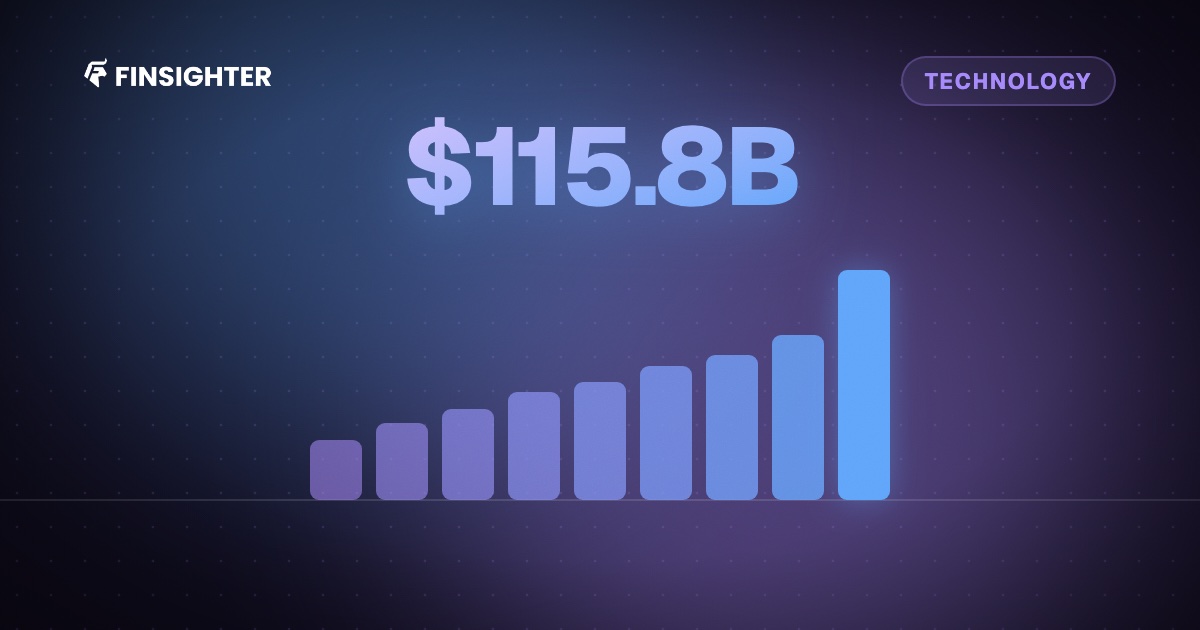
Revenue came in at $115.8 billion against a Wall Street projection of $109.1 billion, yet the biggest story on the call was who was talking. Colette Kress, interim CEO and CFO, gave her first remarks to analysts since Jensen Huang's resignation.
This Nvidia earnings report is part financial scorecard, part succession drama. Let's get started.
Beating Nvidia Earnings Expectations
Think of Nvidia's quarter as a magician's trick performed while the crowd watches the exits. The chipmaker quietly pulled another record out of the hat, and the applause was real even if the room stayed nervous about everything else.
Third-quarter revenue reached $115.8 billion, comfortably past the $109.1 billion Wall Street had pencilled in. Net income hit $65.3 billion. Investors liked what they saw and nudged shares up about 4% in after-hours trading.
Still, a beat is not a bow tie on a crisis. One analyst noted that a blockbuster report cannot shift the spotlight from the boardroom, and that the situation is still in flux.
Reading Nvidia's Earnings Guidance
Guidance is where a company stops describing the past and signs its name to the future. Nvidia signed big, and in handwriting that is hard to dismiss.
The fourth-quarter forecast of $130 billion topped the $125.5 billion analysts expected, though the outlook leaves out data-center computing sales destined for China. Interim CEO Colette Kress added a longer view, pointing to 75% revenue growth in fiscal 2028.
Yet a forecast is a promise, not a receipt. Strong demand for high-end GPUs is the headline, but leaving China out of the math is a quiet reminder that politics now sits in the spreadsheet next to the orders.
Weighing Margins and Vera Rubin
Margins are the pulse check on a chip empire. Revenue tells you how loudly the engine roars; gross margin tells you how much fuel it burns to get there.
Nvidia held its GAAP gross margin at 74.8%, above its own outlook, while data center revenue reached $107.6 billion. Behind those figures sits Vera Rubin, the next-generation platform, now in full-scale mass production and running at multiple cloud providers.
The watch item is memory. Analysts flag rising memory costs as a pressure point on the systems Nvidia sells, so margin strength is something to monitor, not something to bank. Delivery times can also stretch even when the numbers shine.
Facing a Leadership Vacuum
Imagine a record-setting kitchen with no head chef and a health inspector at the door. That is Nvidia's boardroom today, minus the comfort of a clear recipe.
Board chairman Harvey Jones said the company does not intend to reinstate Jensen Huang as CEO and has hired Heidrick and Struggles to find a successor. Huang admits serious personal mistakes, says he is open to returning, and is set to testify before Congress on Dec. 1.
Yet a clean quarter does not close the case. Analyst Dan Ives points to the 15% threshold for a special shareholder meeting, activist pressure and the Commerce Department's view of the export investigation as the next chapters. The SEC is also probing disclosure practices.
Tracking Nvidia Earnings Signals
Nvidia's results have become the pulse the whole AI sector checks before trusting its own health. When the pulse is strong, the market exhales. When the patient also has legal troubles, the exhale is short.
Entering the report, shares had fallen 24% since the start of the month and declined six straight weeks, the longest losing streak since 2012. That slide fed existing fears that massive AI chip and infrastructure deals are inflating a bubble.
So the report buys time, not certainty. The next signals are a permanent CEO, the Commerce Department's stance and whether Vera Rubin keeps ramping. Each one tests whether the product machine runs without its most famous operator.
Long Story Short
Nvidia delivered the numbers the bulls wanted: revenue of $115.8 billion, a fourth-quarter forecast of $130 billion and a record that Wall Street underestimated. Demand for its high-end GPUs is still strong. But the second act is about governance. The board has ruled out bringing Huang back, the SEC is investigating and Huang is due before Congress. If you buy Nvidia products for work, check with your vendor within one week about any change to delivery dates or prices. For investors, the lesson is to separate the engine from the driver's seat. Judge Vera Rubin's ramp, margin strength and the CEO search as three distinct tests, not one mood. The next chapters are still being written, and patience beats panic.