South Korea Moves to Steady the Kospi as the AI Rout Deepens
Watch how Seoul is easing margin rules for brokers as the Kospi slides with AI chip stocks, and why the market's reliance on two chipmakers keeps every swing amplified.

Key Takeaways
- The Kospi went from the world's best-performing market to a rout in a matter of months, and AI optimism was the engine both ways.
- SK Hynix and Samsung make up nearly half of the market's value, so the Kospi is really a two-stock mood ring.
- Seoul's answer is a three-month waiver on brokerage collateral rules, aimed at forced selling rather than fear itself.
- Leveraged retail bets turned a pullback into a stampede, because a margin call makes the decision for you.
- Elice fell 32% on debut despite demand roughly 400 times available shares, proof that hype and valuation are different animals.
- Bulls point to record profits and shareholder payouts, bears point to AI funding doubts. Both are reading real numbers.
South Korea's stock market just had the kind of week that sends veteran traders hunting for antacids. The Kospi, once the world's best-performing market, tumbled as the AI trade unwound.
Chip giants SK Hynix and Samsung took the hardest hits, trading halts interrupted the session, and officials answered with a rule change meant to calm nerves. It is a tidy case study in how fast euphoria turns.
Behind the headlines sit a few questions worth chewing on. How top-heavy is this market, what does Seoul's new move actually do, and are the bulls right that the sell-off has gone too far? Let's get started.
Watching the Kospi Unravel
The Kospi spent a year behaving like a rocket and a few months behaving like a rock. Picture a hot-air balloon whose burner suddenly cuts out mid-flight. South Korea's benchmark nearly tripled in the year to its June peak, fuelled by chip optimism and a flood of retail money.
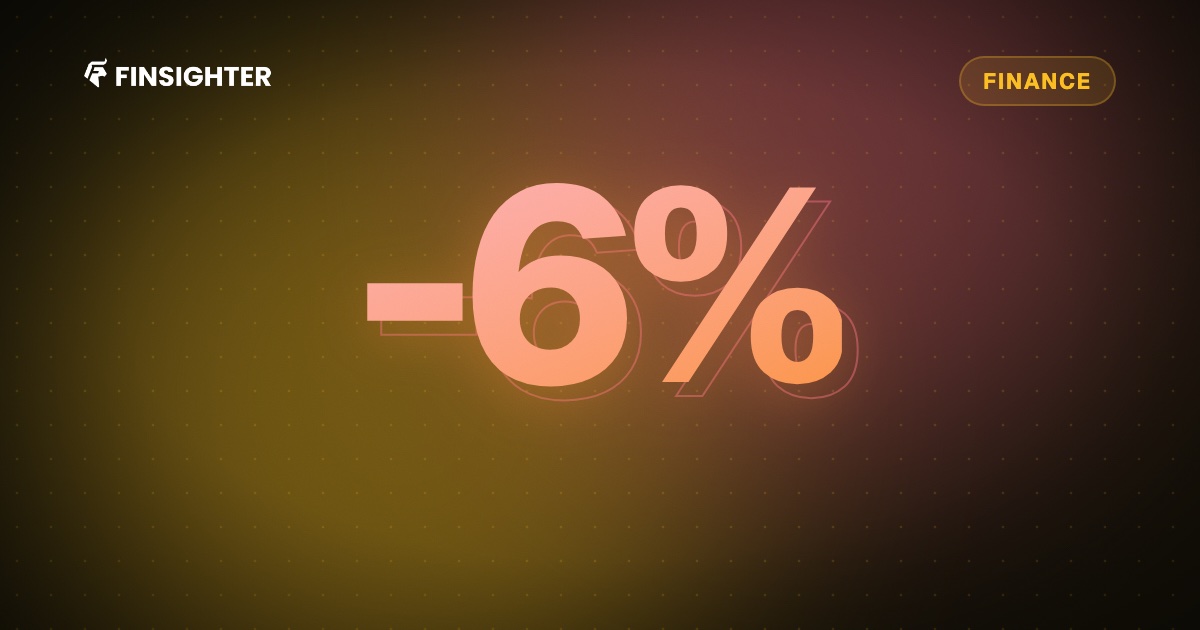
Then Friday arrived. A brief trading halt interrupted the open, and the index finished 6% lower at 5059.60, a retreat from an even uglier start. Roughly $2.4 trillion of market value has evaporated since the June high, a sum that turns a victory lap into a hard landing.
The spark came from Wall Street, where the Nasdaq's 5.5% tumble on Thursday was its worst one-day drop in more than a year. Seoul's chip stocks inherited the pain instantly. Rallies built on optimism rarely retreat politely, and this one slammed the door.
Leaning on Two Chipmakers
Think of the Kospi as a seesaw with two very heavy kids sitting on one end. SK Hynix and Samsung together account for nearly half of the market's value, so wherever those two tilt, every other stock rides along, whether it likes the view or not.
Friday showed the physics in action. SK Hynix dropped 10% and Samsung fell 6.4% after their American peers were battered overnight. Both supply high bandwidth memory to Nvidia, whose own shares slid 9.3% on Thursday in the US, so the pain travelled straight down the supply chain.
That outsized weighting helps explain why trading suspensions have multiplied in 2026 compared with earlier years. A market this top-heavy doesn't wobble, it lurches. Regulators can slow the lurch with a pause button, yet the weight distribution stays exactly where it was.
Easing Brokerage Collateral Rules
Seoul's newest move is less a bailout than a pressure valve. Finance Minister Lee Hyoung-Il announced a temporary loosening of collateral rules for brokerage firms, designed to stop forced selling from feeding on itself and dragging the equities market down with it.
Brokers normally have to maintain a 140% collateral ratio on margin loans. They now get a three-month waiver from that requirement, effective from the start of next week. Lee added that further stabilizing measures can follow if volatility persists.
Lee insists South Korean fundamentals remain strong and urged investors to resist excessive pessimism. The Finance Ministry has likewise promised timely, preventive action. Yet a waiver treats the symptom, not the cause: it buys the market some breathing room, not a reason for buyers to come running back.
Unwinding Leveraged Retail Bets
Leverage is a lovely friend on the way up and a terrible houseguest on the way down. As Korean indexes hit records earlier this year, officials fretted about retail investors borrowing heavily to buy SK Hynix and Samsung.
Many piled into single-stock leveraged ETFs after regulators loosened restrictions in May, leaving them exposed to margin calls, the moment a broker demands more cash because an asset has sunk below a set level. Enough of those calls and selling begets more selling.
Even the new-listing window offered no shelter. AI cloud firm Elice sank 32% on its Kosdaq debut despite subscriptions topping available shares roughly 400 times. Heavy demand met a rich valuation, and the valuation won, a reminder that crowded enthusiasm is not the same as value.
Weighing the Kospi Rebound Case
Bulls and bears are reading the same scoreboard and arguing over the final score. Some analysts think the market has sold off too heavily, pointing out that SK Hynix and Samsung keep posting record profits quarter after quarter.
Nomura calls the Kospi's valuation compelling and sees an approach toward 7500-8000 as the more likely near-term path. Support also comes from buybacks and AI investment. SK Hynix plans to return 100 trillion won to shareholders this year, and Samsung has reaffirmed sizeable payouts for 2026.
Yet Nomura itself flags higher interest rates and elevated oil prices, and the sell-off began on doubts about how AI infrastructure gets funded. The bull case rests on appetite for chips, and appetite is a fickle thing. Strong profits buy credibility, not immunity.
Long Story Short
South Korea's story is a lesson in concentration. A market riding on two chipmakers soared on AI optimism, then fell hard when that optimism wobbled. Seoul's response, a temporary waiver on brokerage collateral rules, targets the forced selling rather than the fear itself. For investors, the practical takeaway is humble. Know how much of your portfolio leans on a single theme, and treat borrowed money as a magnifier of mistakes, not a shortcut. Check what you actually own before a headline checks it for you. The outlook splits cleanly. Bulls point to record profits and big shareholder payouts, bears point to stretched AI valuations and shaky funding for AI infrastructure. Neither camp is shy, and the coming weeks will show who blinked. Markets forgive patience more often than they forgive panic.